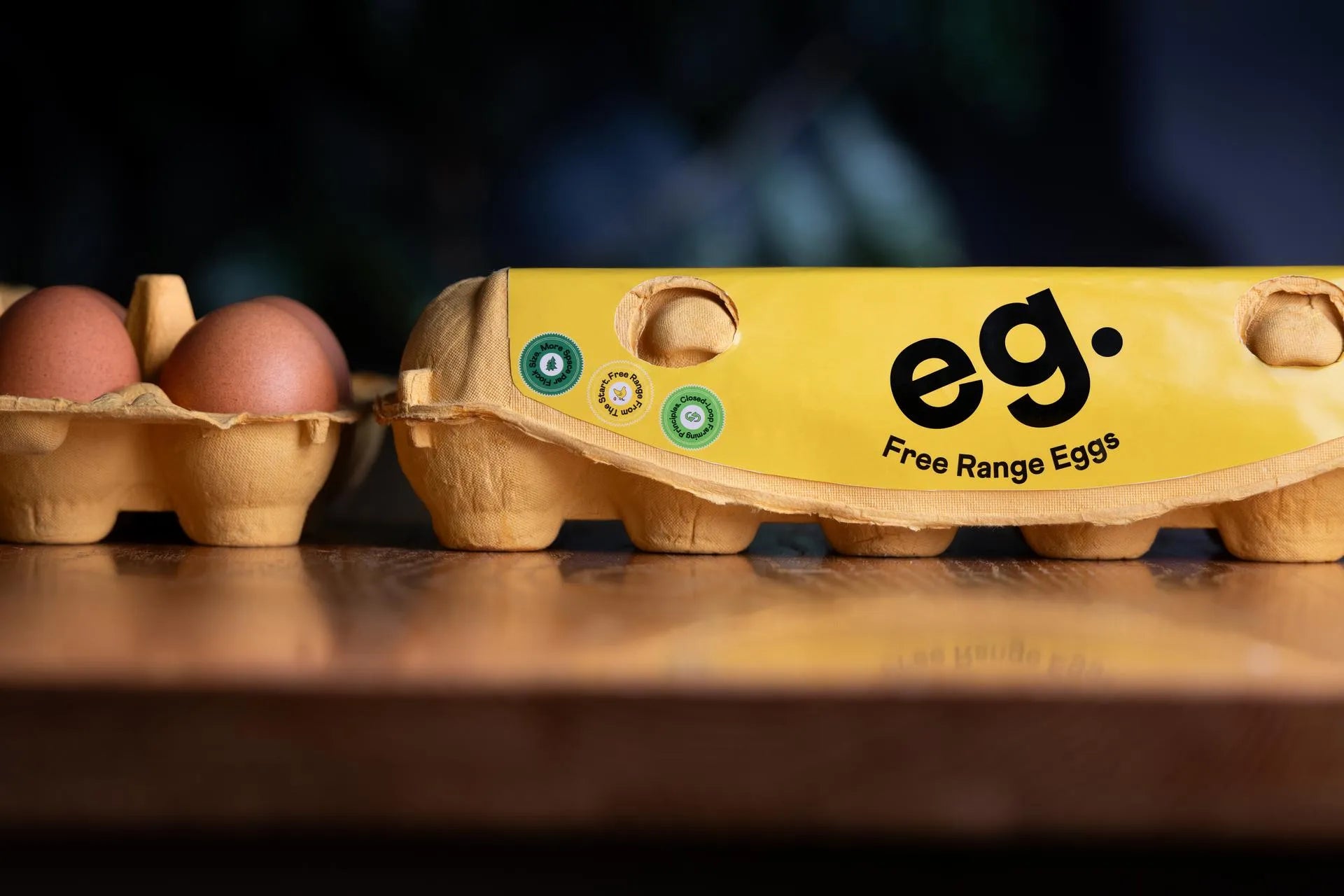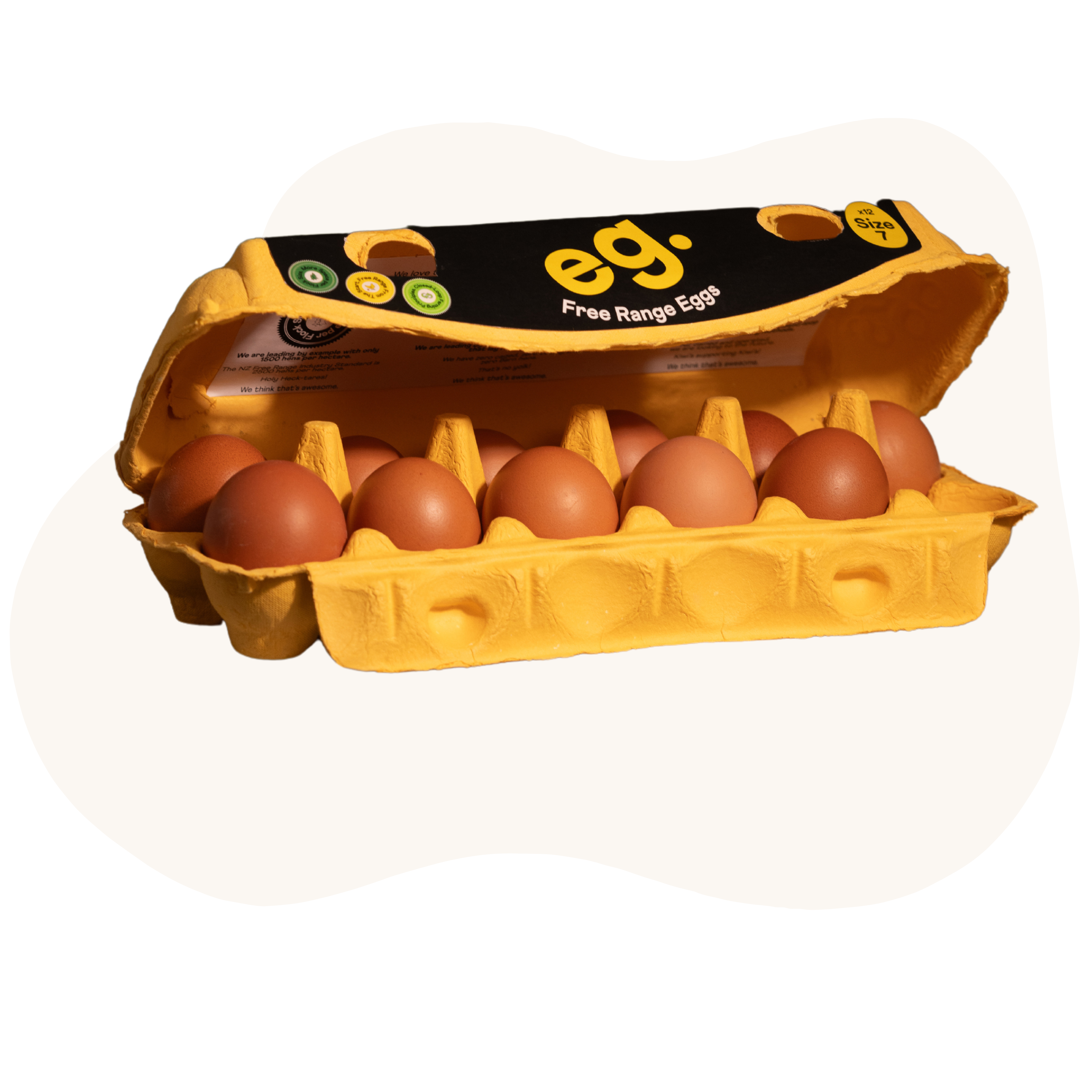
Taste The Difference - How Happy Free Range Hens Lay The Perfect Egg

When it comes to chickens and eggs, nobody really knows which came first. Here at eg., though, we knew the answer straight away: the chicken comes first!
What makes an egg taste great? We believe that when the chicken comes first, she lives a life made for hens, and a happy, healthy hen lays a better egg. But we also know you've probably wondered: are free range eggs actually better, or is it just a nice story on a carton?
It's a fair question, so we went digging (just like our hens). Here's what the research says about free range eggs and taste, nutrition and hen wellbeing, along with a few honest surprises.
Quick Takeaways
- Taste: Blind taste tests show mixed results. Freshness and what a hen eats make the biggest difference to flavour.
- Vitamin D: Hens that spend time outdoors in the sun lay eggs with more vitamin D.
- Omega-3s and vitamin E: Hens that forage on grass and greens can lay eggs with more of both.
- Hen wellbeing: Stress can affect egg quality, so calm, comfortable hens are in the best shape to lay a great egg.
You get out what you put in. Look after the hen, and the egg looks after itself.
Do Free Range Eggs Really Taste Better?
Here's the honest answer: it's complicated! Plenty of people swear free range eggs taste better, but blind taste tests tell a more mixed story.
In 2021, researchers at Lincoln University here in New Zealand ran a blind taste test comparing cage eggs with eggs from free range and other systems. They found some differences in how much people liked the taste and texture, but not enough to clearly separate the eggs into groups. And when the NZ Herald held a blind tasting of eggs from 14 farms, the top spots were separated by just half a point, with free range eggs sharing second place.
So what does make an egg taste great? Two things matter most:
- Freshness. As an egg ages, the white thins out and the yolk flattens. A fresh egg has a firm, thick white and a yolk that sits up proud in the pan. That's why we pack our eggs within 48 hours of being laid.
- What the hen eats. A hen's diet flows straight through to her eggs. Hens that forage on grass and greens pick up natural plant pigments that deepen the colour of the yolk, and many people find that makes for a richer-looking, more satisfying egg.
Are Free Range Eggs More Nutritious?
This is where the science gets really interesting. Every egg is packed with protein, vitamins and minerals, but there's good evidence that how a hen lives can change what ends up inside her eggs.
More vitamin D from sunshine. Hens make vitamin D in their skin when they're out in the sun, just like we do, and it passes into their eggs. A 2014 German study found that hens with access to the outdoors laid eggs with three to four times more vitamin D in the yolk than hens kept inside. Researchers at the University of Reading saw a similar pattern in UK supermarkets, where free range eggs had more vitamin D than eggs from indoor systems.
There's an important catch, though: the German researchers found the benefit depends on hens actually wanting to go outside, and some supermarket free range eggs they tested were fairly low in vitamin D. In other words, a door to the outside isn't enough. The range has to be somewhere hens love to be.
More omega-3s and vitamin E from foraging. A Penn State study compared hens foraging on pasture with hens fed only commercial feed. The foraging hens' eggs had twice as much vitamin E and long-chain omega-3 fats, and more than double the total omega-3s. Those hens spent lots of time grazing, so the more a hen forages, the more likely she is to see these benefits.
Does A Happy Hen Really Lay A Better Egg?
We've always said happy hens lay better eggs, and there's science that points that way too.
When hens are stressed, their bodies release a stress hormone called corticosterone. In one study on laying hens, raising this hormone led to thinner egg whites and a sharp drop in the number of eggs laid. Other research found that when hens were stressed by things like heat, handling or being moved, the stress hormone even showed up in their egg whites.
The flip side is simple: a calm, comfortable hen who can follow her natural instincts is in the best shape to lay a great egg. That's exactly what we've built our whole farm around.
How We Keep Our Hens Happy
We're exclusively free range. Every single hen on our farm lives a free range life, and we're working hard every day to raise the free range standard, not just meet it.
We think from our hens' point of view. After all, they're the ones living on the farm and laying the eggs, not us! Hens love to scratch, forage and play somewhere they feel safe, so that's exactly what we built. Our 240 hectare farm uses a sun-shaped layout instead of the usual rows of sheds, giving every flock more room to roam.
From climate-controlled laying sheds by Big Dutchman to covered conservatories for dust-bathing and ranges full of shrubbery and jungle gyms, our hens have it pretty good. You can take a full tour on our Our Farm page.
Into The Forest
Here's something you might not know about the eg. farm. We purposely positioned our sheds and ranges right next to a large pine forest, so when the gates are open, our hens can wander among the trees too!
It gives them a taste of the kind of habitat their ancestors lived in, with plenty of shade, cover and interesting things to discover. And it's a win for the forest as well: as the hens explore, their manure acts as a natural fertiliser, helping the trees and plants grow strong.
Anatomy Of A Perfect Egg
So how does all of this add up to the perfect egg? Crack one open and you'll see for yourself.
The shell. A happy, healthy hen lays an egg with a strong brown shell that protects everything inside.
The white. Look for thick, fluffy egg whites that hold together beautifully in the pan.
The yolk. This is where foraging really shines. All that pecking at grass and greens gives our hens natural plant pigments, which help create those gooey, golden yolks.
Try eg. Eggs For Yourself
When the chicken comes first, we think you'll see and taste the difference. So next time you're at the shops, look out for eg. eggs and try them for yourself. Our store locator will point you to your nearest stockist.
Every carton you pick up supports our mission to create meaningful change for hens across the egg industry. And that's something to feel good about at breakfast time! Ready to crack open the eg. difference? Find your nearest stockist with our store locator and pick up a carton this week!
Last updated November 2026
Share this story
More eg. Articles

Egg Sizes And Grades Explained - What Mixed Grade, Size 7 And Jumbo Actually Mean

Quick And Easy Kid Friendly Breakfast Recipes

How Many Grams Of Protein Are In An Egg?
Sign up to our newsletter