Egg Sizes And Grades Explained - What Mixed Grade, Size 7 And Jumbo Actually Mean

Ever wondered what NZ egg sizes actually mean? Learn how egg grading by weight works, which grade to buy for baking, and why Mixed Grade offers great value.
If you've ever stood in the supermarket aisle wondering why one carton says Mixed Grade, another says Size 6 or 7, and a third says Jumbo, you're not alone. It's one of the most common questions people ask when choosing their eggs, usually followed by some version of "but these ones look small for a Size 7."
Here's the thing that most people don't understand - egg grading in New Zealand has almost nothing to do with how big an egg looks on the shelf. It's based purely on weight. A small-looking egg can easily outweigh a slightly bigger-looking one sitting right next to it. Once you know how the system actually works, choosing the right carton of eggs gets a lot easier, and those "why does this feel smaller" moments make a lot more sense!
How New Zealand Eggs Are Graded
Egg grading in New Zealand follows the Egg Producers Federation of New Zealand Code of Practice, which sets out minimum weights for each size category. Every egg that passes quality checks (things like shell strength and internal quality, assessed through a process called candling) is then weighed and sorted into its grade.
That's really the whole system in one sentence: eggs are grouped by weight, not by how long, round, or "big" they appear. Two eggs can look completely different in shape and still land in the same grade, because grading only cares about what the scale says.
The NZ Egg Size Chart
Here's how the grades break down, from smallest to largest, based on the minimum weight per egg:
|
NZ Grade |
Common Name |
Minimum Weight (per egg) |
|
Size 4 |
Pullet |
35g |
|
Size 5 |
Medium |
44g |
|
Size 6 |
Standard |
53g |
|
Size 7 |
Large |
62g |
|
Size 8 |
Jumbo |
68g |
Each step up the scale represents a genuine jump in weight, not just a label change. A Size 7 has to weigh at least 62 grams, full stop, regardless of whether it looks long and narrow or short and round on the day.
What Does Mixed Grade Actually Mean?
Mixed Grade cartons are exactly what the name suggests - a carton made up of eggs from across the size range rather than one single grade. Instead of every egg meeting the same minimum weight, you'll get a genuine mix, some closer to a Size 6, others closer to a Size 7 or beyond.
This is why a Mixed Grade carton can feel a bit inconsistent from one egg to the next, and it's completely normal. It's also part of what makes Mixed Grade such good everyday value. You're getting the full spread of what the hens are laying that day, rather than eggs sorted down to one narrow weight band.
Why A Small Looking Egg Can Weigh More Than A Big One
This is the bit that trips most people up, and it's worth explaining properly because it's genuinely counter-intuitive. Grading is based purely on weight, and weight doesn't always match up with how big an egg looks to the eye. A few reasons why this happens might be:
- Shell Shape Varies. Some eggs are naturally longer and narrower, others are shorter and rounder. A rounder egg can hold more weight in a shape that looks more compact, while a longer egg might look impressive but actually be lighter than it appears.
- Shell Thickness Differs Egg To Egg. Two eggs of a similar size can have slightly different shell thickness, which affects the overall weight without changing much about how the egg looks from the outside.
- What's Inside Matters More Than What's Outside. A yolk-heavy egg or one with a bit more white in it will weigh more than an egg that just looks bigger because of its shape.
- Your Eye Is Comparing Shape, Not Mass. We're naturally better at judging length and width than we are at judging weight just by looking, which is exactly why grading is done on a scale rather than left to a visual guess.
So next time a Size 7 looks smaller than you expected sitting next to a Mixed Grade egg, remember the label isn't describing how it looks. It's describing what it weighed when it was graded.
Which Grade Should You Choose?
There's no single "best" grade, it really comes down to what you're using the eggs for but there are some guidelines you can follow for best results when cooking with eggs.
- Baking: Most recipes are written with a Size 7 in mind, so if you're following a recipe closely (especially something exact like a cake or meringue), Size 7 is a safe, consistent choice.
- Everyday Cooking: Mixed Grade is hard to beat for scrambled eggs, omelettes, or a quick breakfast, where a bit of natural size variation makes no real difference to the result.
- Big Appetites Or Big Batches: Jumbo is worth reaching for if you're cooking for a crowd, want extra protein per egg, or just prefer a heartier fried or poached egg on your plate.
- Value Seekers: Mixed Grade often gives you the best overall value, since you're getting the full range of what's been laid rather than paying a premium for consistency you might not need.
If you're ever unsure, weighing a couple of eggs from your carton on the kitchen scale will tell you exactly where they sit, and it's a handy way to see the grading system in action for yourself.
What If The Recipe Calls For Size 7, But You Only Have Size 6 Or Jumbo?
Because grading is based on weight, swapping sizes changes the total amount of egg going into your mix, not just how many eggs sit in the bowl. For everyday baking like cakes, muffins or banana bread, this rarely makes a noticeable difference. For anything more precise, like meringue, macarons or soufflé, it's worth paying closer attention.
Size 7 (62g minimum) is what most recipes are written around. If you're using Size 6 (53g) instead, each egg is roughly 9g lighter, so a recipe calling for three Size 7 eggs will come up around 27g short with Size 6, about half an egg's worth. For most bakes this won't matter, but for delicate recipes, add an extra yolk or a splash more white to close the gap, or use one additional Size 6 egg for every six Size 7 eggs the recipe calls for.
Going the other way, Jumbo (68g) runs about 6g heavier than Size 7. Across several eggs this can leave your batter slightly wetter than intended. If a recipe calls for more than four eggs, holding back a tablespoon or two from one egg usually brings the total back in line.
How To Swap Egg Sizes - A Rough Guide
Because New Zealand egg grading is based on weight, swapping sizes changes the total volume of egg going into your recipe. If you don't have Size 7 on hand, use this quick cheat sheet to adjust your bake without ruining the texture:
|
Scenario |
Adjustment/Advice |
Details |
|---|---|---|
|
Swapping Size 6 For Size 7 |
Use three Size 6 eggs plus one extra egg yolk. |
Size 6 eggs are roughly 9g lighter than Size 7. Alternatively, add an extra Size 6 egg for every six Size 7 eggs required. |
|
Swapping Jumbo For Size 7 |
Hold back about a tablespoon of white from one egg. |
Jumbo eggs run about 6g heavier, which can make batters too wet. This applies if a recipe calls for more than four eggs. |
|
When To Wing It |
Swap sizes directly for forgiving bakes; weigh for exact science. |
Forgiving bakes include muffins, pancakes, or banana bread. Exact bakes like macarons or soufflés require matching the total grams expected. |
As a general rule, if the recipe is forgiving, cook with what's in the carton and don't overthink it. If it's precise, crack your eggs into a bowl, weigh them, and match the total grams to what the recipe would expect from Size 7 eggs, adjusting up or down from there.
Storage And Freshness - Does It Affect Weight Or Quality?
Grading happens once, at the point eggs are packed, based on the weight and quality checks (including candling) done at that time. It isn't something that happens again once the carton reaches your fridge.
That said, eggs do lose a small amount of weight as they age. Shells are porous, so moisture and gases move through them gradually over time. This is part of why an older egg sits higher in a glass of water, and why a fresher egg tends to hold a firmer white once cracked. This natural moisture loss is already accounted for in the grading process at the point of pack, so it doesn't change the label on your carton at home.
Candling itself is a quality check rather than a weight check. It uses light to look inside the shell, at the air cell size, yolk position and any internal defects, without cracking the egg, and works alongside weighing to determine both grade and quality before eggs go out.
For the best combination of weight accuracy and freshness, keep eggs refrigerated, since this slows moisture loss through the shell, and use them within the date on the carton. This matters most for baking, where a fresher egg white tends to whip up better and hold its structure more reliably.
The Simple Float Test (Freshness vs Age)
Wondering if that carton sitting at the back of your fridge is still good to use? You don't have to crack it open to find out. All you need is a glass or bowl of cold water:
Sinks Flat (Very Fresh): If the egg sinks straight to the bottom and lays flat on its side, it's very fresh. The air cell inside is tiny, meaning minimal moisture has evaporated through the shell.
Stands Upright On The Bottom (Older, But Good): If the egg touches the bottom but stands up on its end, it's a few weeks old. It's completely safe to eat and actually ideal for hard-boiling because older eggs are much easier to peel.
Floats To The Top (Time To Discard): If the egg floats to the surface, it has lost too much moisture over time, allowing a large air pocket to form inside. It’s best to discard this one.
Common Questions About Egg Sizes
Is A Jumbo Egg Always Bigger Than A Size 7?
By weight, yes, a Jumbo has to meet a higher minimum than a Size 7. Visually though, the difference can be less obvious than you'd expect, especially against a rounder shaped Size 7.
Why Do My Mixed Grade Eggs Look Different Sizes In The Same Carton?
Because that's exactly what Mixed Grade means. You're getting a genuine mix pulled from across the size range, rather than eggs sorted into one specific grade.
Does Egg Size Affect How It Cooks?
Slightly. Baking recipes are more sensitive to size since ratios matter, which is why Size 7 is the common default. For frying, scrambling, or boiling, the difference between grades mostly comes down to portion size rather than how the egg behaves.
Do Bigger Eggs Mean Better Quality?
Not necessarily. Size and quality are graded separately. A Mixed Grade or Size 6 egg from well cared for, genuinely free range hens can easily be better quality than a Jumbo egg from a lower welfare system.
Got a different question? Our FAQs page covers some of the egg size customers ask us most.
Ready To Pick Your Eggs?
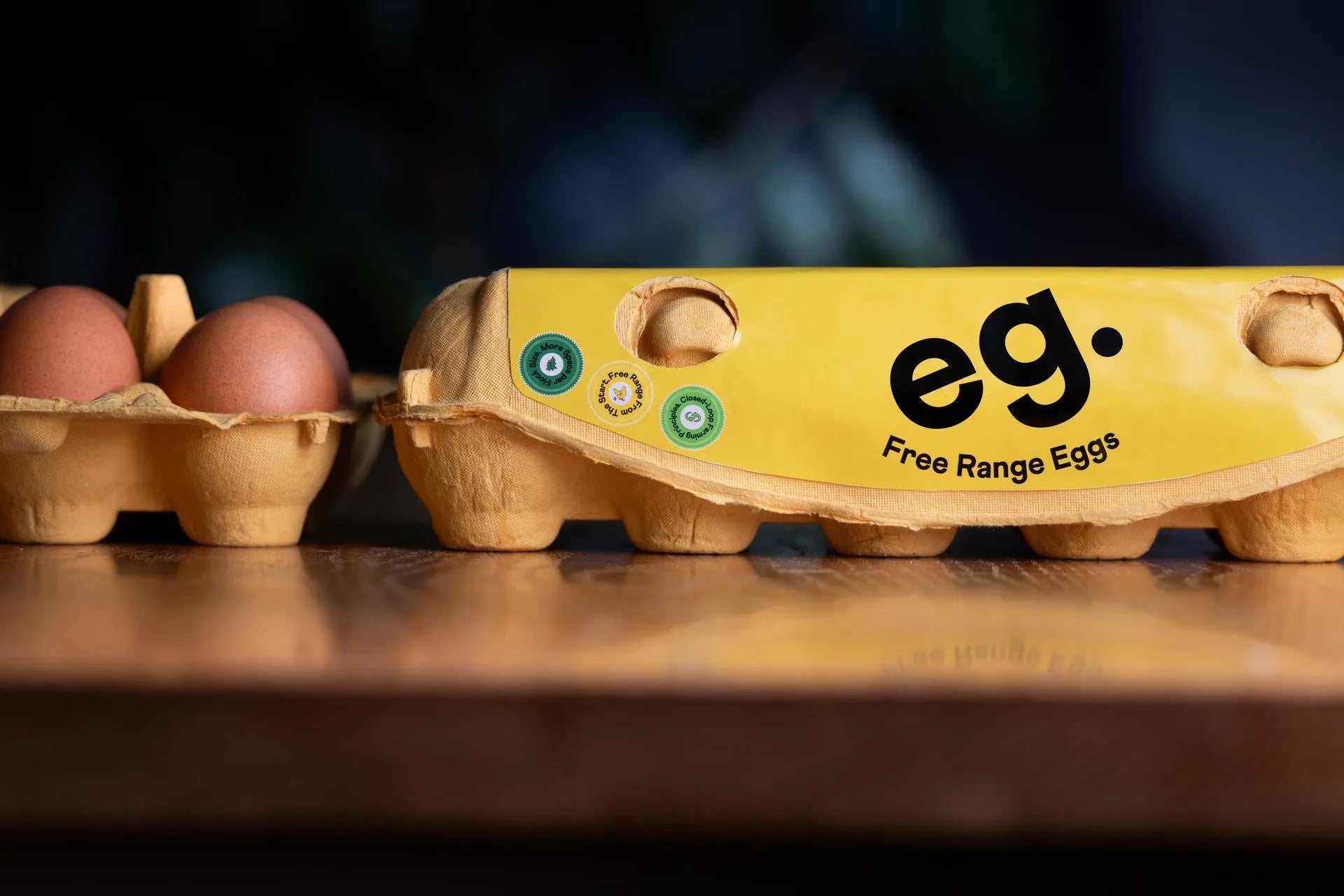
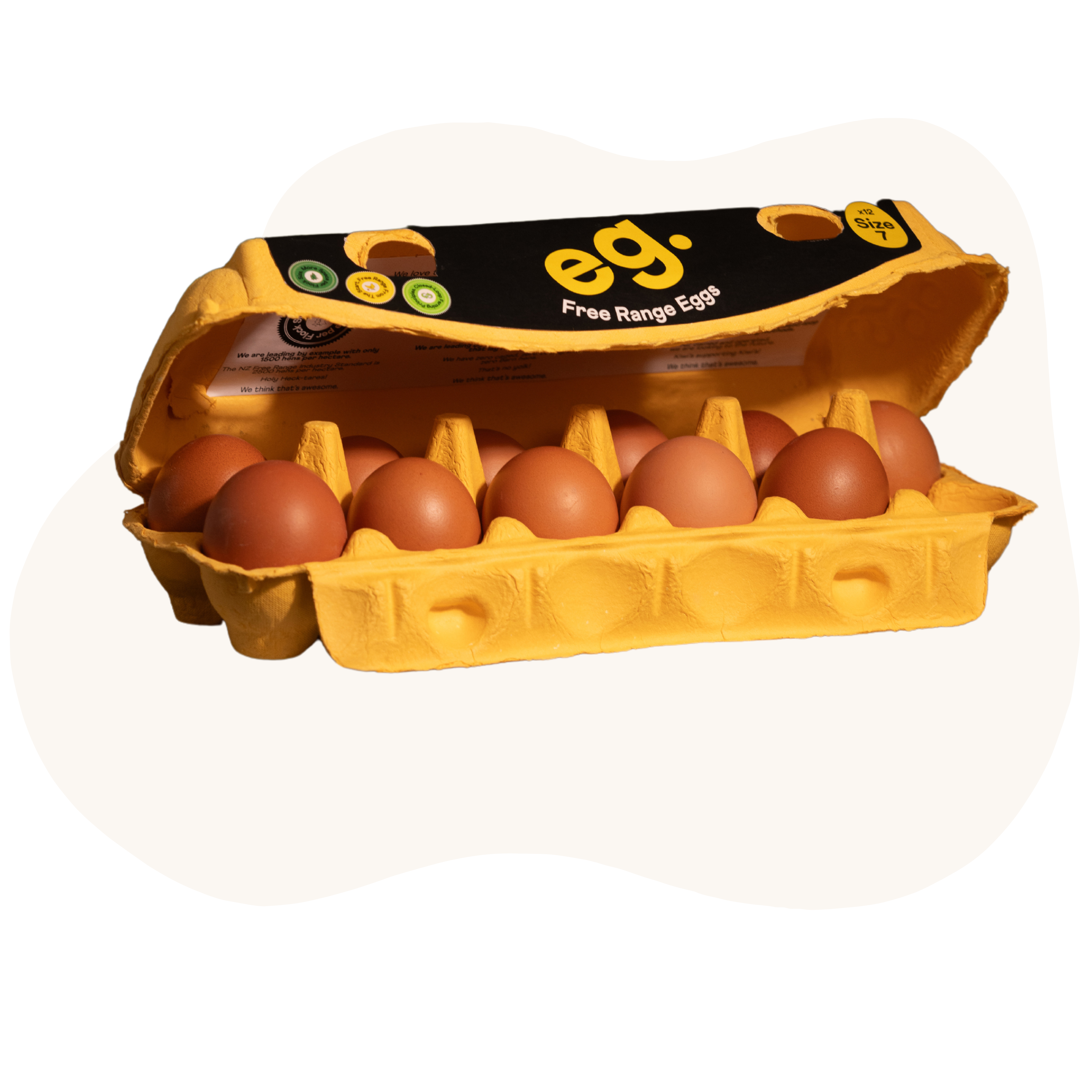
To make things easy at the shelf, the eg. Free Range Egg cartons are colour coded so you can grab the right grade without squinting at the fine print - Look for the yellow label for Mixed Grade eggs, the black label for Size 7 and Jumbo eggs are the blue label.
Whichever grade you reach for, every egg carries the same free range promise behind it. Our hens spend their days genuinely free ranging on pasture, which is what gives eg. eggs that deep golden yolk and proper flavour, no matter what size or grade ends up in your basket.
Whether you reach for the yellow, black, or blue label, every eg. egg comes from hens that are genuinely free ranging, because for us the chicken always comes first. Shop our free range egg range here and find the grade that suits your kitchen.
Key Takeaways From This Article
- Weight, Not Appearance: NZ egg grading is determined strictly by weight (grams), not visual size or shell volume.
- Standard Baking Size: Most baking recipes assume a Size 7 egg (min. 62g).
- Mixed Grade: Offers the best value for everyday cooking by including a natural mix of sizes in one carton.
Share this story
More eg. Articles

Quick And Easy Kid Friendly Breakfast Recipes

How Many Grams Of Protein Are In An Egg?

Omelettes made easy with eg.
Sign up to our newsletter